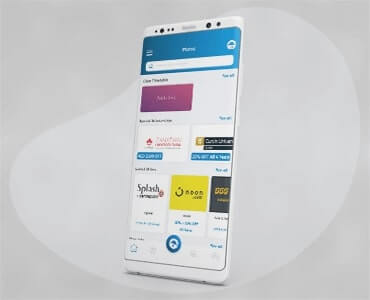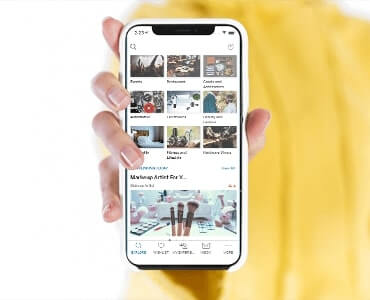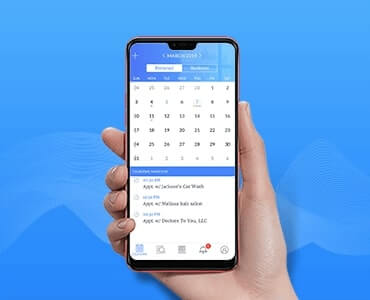
Hybrid UI/UX Design Services That Grow Your Business
Hybrid app development lets you build once and deploy across multiple platforms, cutting the cost and effort of bringing your product to market. Our team builds hybrid apps that match the quality and performance of native apps, delivering results our clients are genuinely happy with.
GTS Infosoft offers a full suite of mobile application services tailored to your business needs. Backed by deep expertise in hybrid mobile development, our skilled and dedicated team carefully designs and builds applications for all major platforms, including Android and iOS, with a single, efficient codebase.
We build cross-platform and hybrid mobile apps using modern frameworks such as Flutter and React Native, alongside core web technologies like HTML5, CSS3, and JavaScript. Our team brings advanced experience across these technologies and follows current best practices and web standards to deliver fast, reliable, maintainable apps.
Why Hybrid UI/UX Design matters to a successful app
In the early days of mobile, building fully native apps was the default approach. But as user numbers grew and devices multiplied, the advantages of multi-platform development became clear. Hybrid mobile apps sit between native and web, combining the best qualities of both to deliver a range of compelling benefits, including:

Lower development costs
Building a hybrid mobile app is typically more affordable and faster than developing separate native apps. In a competitive market where time to market matters more than ever, that cost efficiency helps businesses launch quickly. With a single shared codebase and mature frameworks like Flutter and React Native, hybrid developers accelerate delivery and ship to multiple app stores, saving both time and money.
Consistent UI/UX
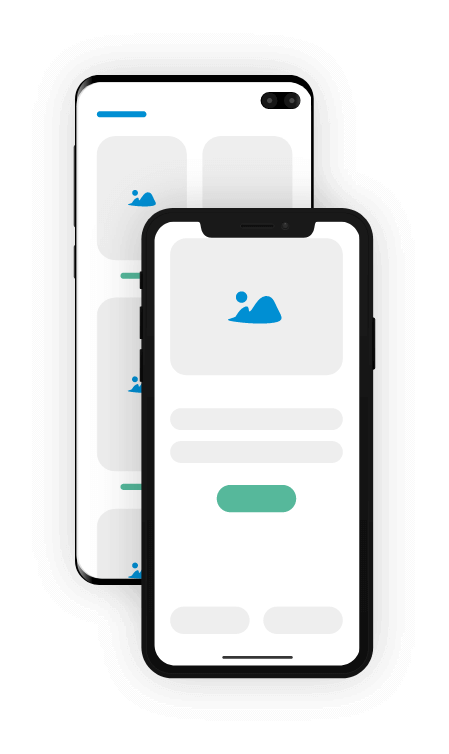
A consistent experience across platforms is one of the main reasons hybrid apps are so popular. Users expect an app to feel instantly responsive on every device and to run without glitches. Hybrid apps are built around the idea that information is just a tap away, displaying content quickly and adapting smoothly to different screen sizes. Being lightweight, a well-built hybrid UI loads high-definition graphics and content fast, even on varied connections.
Easy integration
Like native apps, hybrid apps tap into the device's underlying capabilities, enabling seamless synchronization with other compatible apps and reducing integration headaches for developers. As a result, hybrid apps work smoothly with native device features like the camera, messaging, and GPS to deliver a cohesive user experience.
Offline support
Hybrid apps use the device's storage to cache data offline, helping the app load quickly and keeping key content available even when connectivity is poor or unavailable. Since many users want to limit their data usage and enjoy uninterrupted access, a hybrid app delivers exactly that: reliable offline accessibility without performance glitches. It's one of the key reasons hybrid mobile apps are such a practical choice.
Simple maintenance
A hybrid app is designed to make full use of the features available on a mobile device. While native apps also tap those features, they can be harder to maintain for users and developers alike: each update means a new version that users must download. A hybrid app sidesteps much of that versioning, making maintenance as straightforward as updating a web page, often in real time. That flexibility scales naturally as your business grows.